
Why Isn't the Car Driving?
Four weeks from magic to mundane

“Dad, why isn’t the car driving itself?”
My seven-year-old asked me this the other day. Same questioning tone as when he caught me hand-washing dishes last year after the dishwasher broke. Over the last six months since we got our Model Y, self-driving isn’t the future to him - it’s just how cars work.
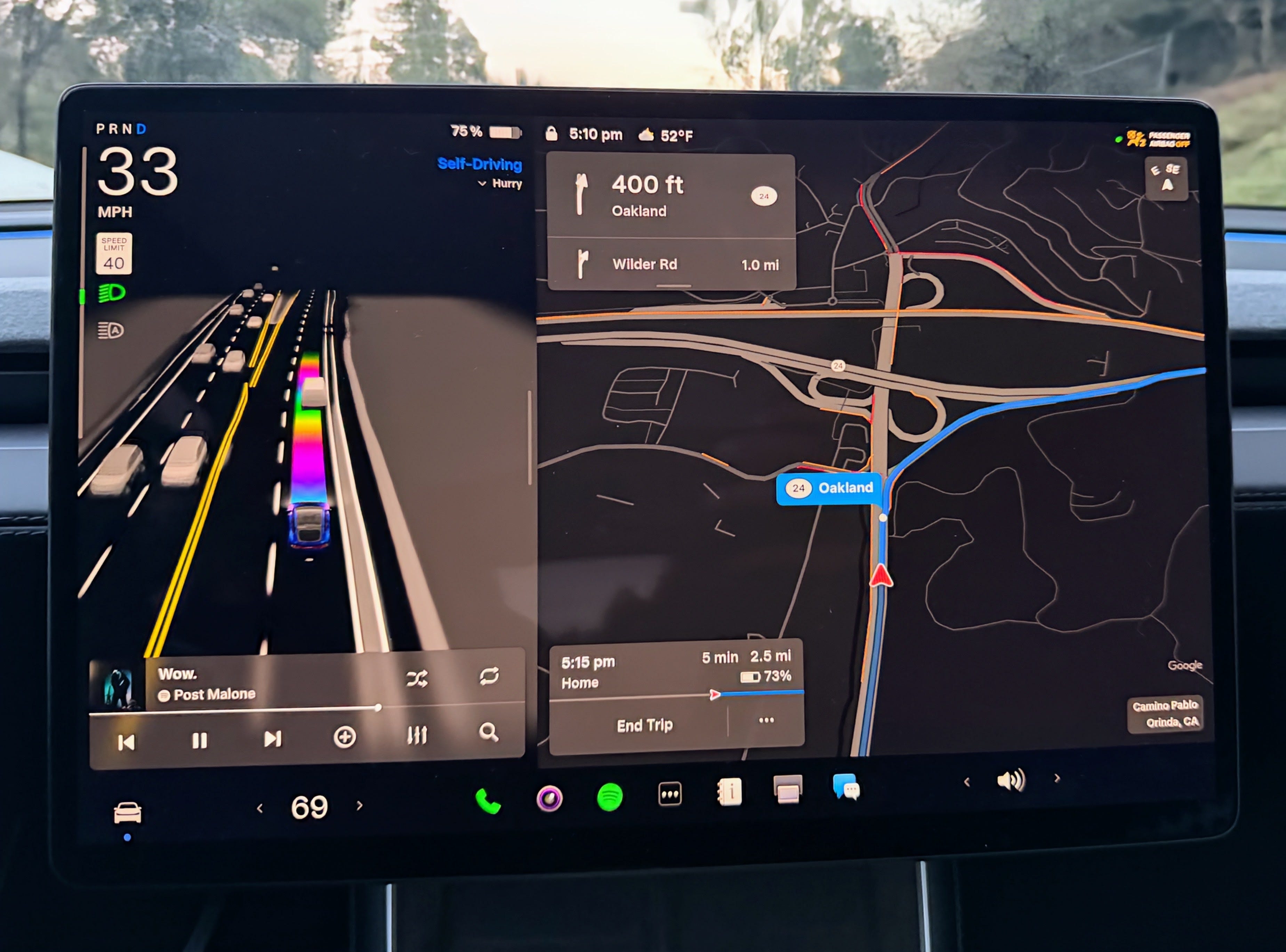
When we first got the car, both kids (and my wife and I, perhaps less audibly) would shriek with delight when I’d lift my hands off the wheel. “The car is driving itself!”
That sense of wonder lasted maybe four weeks. The magic wore off, not because it became less impressive, but because we adjusted to the new normal faster than any of us expected.
The surprise wasn’t that the technology worked. It was how quickly wonder turned into expectation.
We Pushed the Button and Off We Went
Over the holidays my wife commented on how fast our family adapted to Full Self-Driving.
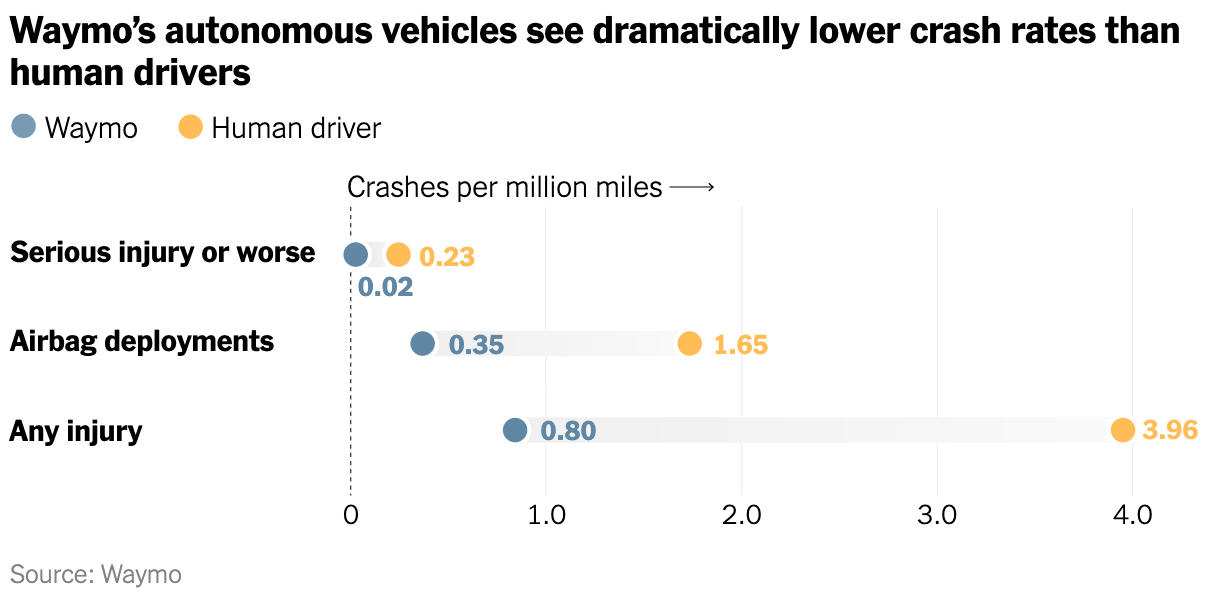
There wasn’t a revelation moment. It wasn’t because I’d read about FSD12’s new approach, or found safety data convincing (one collision per 5 million miles with FSD versus one per 700,000 miles for human drivers).
We got the car, I pushed the button, and off we went.
Within a few weeks, I was using it almost all the time.
The Drive Became Part of the Evening
Over the holidays we drove to a holiday party in Saratoga - what Google Maps said would be a 90-minute drive at night in the rain. Normally I’d dread this drive, maybe skip the party entirely. (My general rule: if transit time exceeds event time, skip). There and back was shaping up to be 2.5 hours driving for 1.5 hours of holiday partying.
But it was fine. Better than fine. The kids were entertained in the back. My wife and I actually had a robust and engaged conversation since I wasn’t white-knuckling through rain on unfamiliar roads. The drive became part of the evening, not the cost of admission.
That’s what’s hard to explain to people who haven’t tried it: it’s not just about a safer drive. It’s about cognitive load. FSD removes the constant low-level stress - the attention, the decisions, the monitoring. You’re still present and responsible, but you’re not doing it anymore.
This is why, of all the “purchases” I’ve made in the last year, FSD has most improved my daily life.
My kids? Believers.
My wife? She’ll ride with me using it no problem, and has slowly started using it herself.
My parents and in-laws? Hard pass. With convincing, they will sit in the passenger seat, but definitely won’t get behind the wheel with it on.
The Passenger Seat Tells You Everything
The statistics about a better drive are overwhelming, but data won’t override instinct about ceding control. Whether or not you buy the exact numbers isn’t the point. Even if FSD were only marginally better, the psychological hurdle would remain. Even though we happily hand over control with every flight, every Uber ride, every train trip - being in the driver’s seat while not driving feels different.
That distinction matters. As a passenger, it’s easy to rationalize FSD: someone else is “responsible,” even if their hands are off the wheel. But behind the wheel themselves and not actually driving? That’s ceding control in a way that feels fundamentally different.
This isn’t really about FSD. It’s about control.
FSD (and AI more broadly) asks us to trust algorithms instead of humans. For many people, that feels categorically different. Not because algorithms are less capable or worse at performing a task (in self drive’s case the data says the algo is meaningfully better) but because trusting a computer takes more than data to build in a way that trusting a stranger doesn’t.
Research from MIT confirms this: we tolerate human error as randomness; we interpret algorithmic error as design failure.
So in my view the real barrier to AI adoption, with self-drive as perhaps the most direct question is not capability (these systems already do remarkable things) or safety (in many domains, AI already outperforms humans) but psychology: will you cede ultimate control to something that isn’t human?
For me and self-driving, the answer is yes.
For the next generation? Bruh, cars just drive themselves.
Will My Kids Need Driver’s Licenses?
For years I’ve asked friends: will our kids need driver’s licenses? Mine are seven and five, so we’re talking about a decade out.
I used to think no. Now I think yes - but not because of technology, but because of the barriers to technology adoption.
As Alan Slutkin notes, in the car context we’re holding self-driving to an impossible standard - expecting perfection while accepting almost 40,000 annual deaths from human drivers. The question isn’t whether autonomous vehicles are perfect. It’s whether they’re better than humans. And increasingly, they are.
Technology will advance faster than regulation, faster than social consensus, faster than our collective comfort. My kids probably will need driver’s licenses - not because they’ll need to drive, but because we haven’t closed the gap between what technology can do and what we’re willing to let it do.
But I think about my son asking why the car isn’t driving itself, like asking about any household appliance. For him, self driving cars have nothing to do with humans ceding control. He never assumed humans had to be in control in the first place.
That’s the future already here in my driveway.
Where in your life are you still holding the wheel not because you need to, but because letting go feels uncomfortable?
Great post Rishi
"[W]e adjusted to the new normal faster than any of us expected." There's probably no more relatable, no more human line that has ever been uttered.