
The Early-Stage Recruiting Trap
Why "I don't have time to interview" is costing you more than you think

Over the last 10 years, initially as one of the first 15 employees at Poynt and Legion, and now having backed over 60 pre-seed and seed founding teams at Garuda Ventures, I've seen the same pattern play out time and again when it comes to early-stage hiring and recruiting.
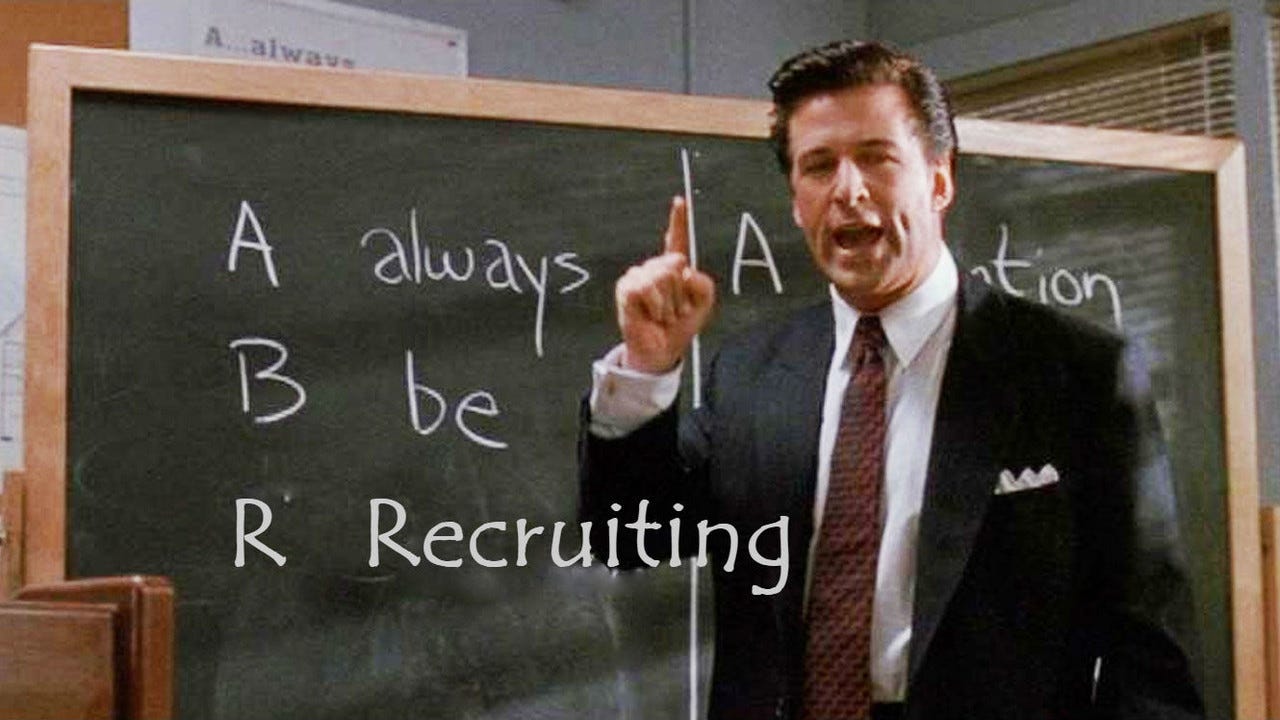
If you make recruiting a secondary priority, you’re not going to make it.
As a founder, you have three jobs that really never go away:
Set the vision
Hire the team
Raise the money
The best founders are great at all three. But even if you can paint an amazing vision and convince investors to back you, if you don’t learn how to hire and recruit effectively, you are essentially lighting the money you’ve raised on fire. You just won’t be able to reach escape velocity and venture-scale.
And to be clear, being “good at hiring” does not mean being able to convince the random LinkedIn inbound on a job rec to join the company. It means figuring out your own company’s formula to find the talent that will help catapult your company to success, while also wasting the least amount of the team’s time interviewing the wrong people (wasted time is wasted capital), and offering the right package to close them and retain them.
Now, most of what I said above shouldn’t be controversial. And yet more often than I’d like, I see founders not put in the time and effort to execute on hiring because they get caught in the trap of firefighting the most immediate and urgent problems in front of them.
“But there's that customer demo next week that we have to nail to lock down the high 5-figure contract, not to mention the huge market validation it provides…”
“But there’s also prep for an investor pitch with that Seed investor that's been following along with the updates and might want to preempt the round…”
“But there’s that new onboarding flow we need to implement…”
“But…”
“But…”
“But…”
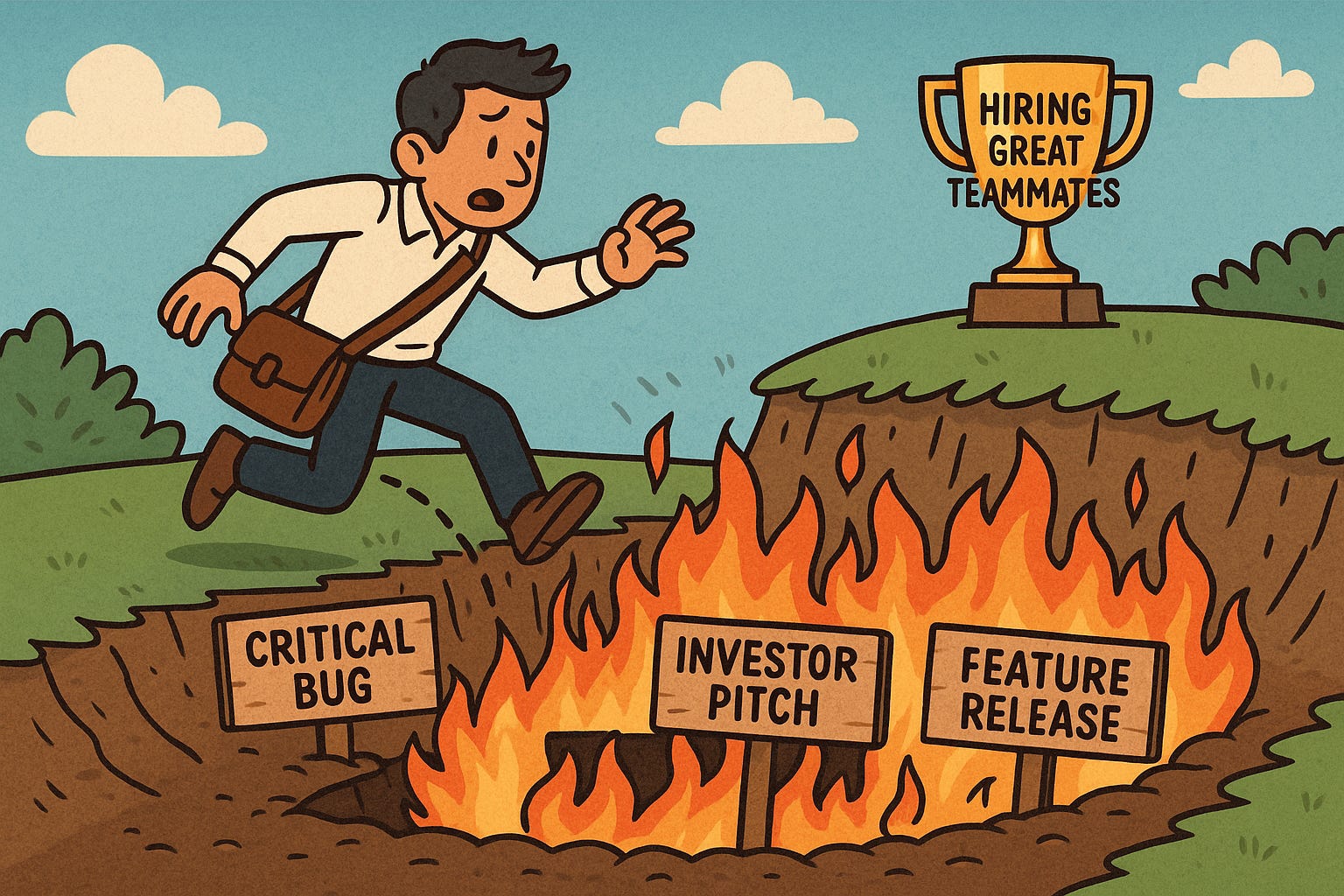
Starting a hiring process often gets dropped to the bottom of a seemingly endless priority list, or put off entirely. I get it. Who has time to run the search, build the funnel, and run the interview process? You're running a company with fewer than 25 people, and everything feels like a hair-on-fire problem that screams "urgent" in a way that starting a recruiting process simply doesn't.
But at some point you're going to reach a level of scale or hit a time constraint where everything starts falling apart because you don't have the right people in place and they haven't had time to ramp. I've watched brilliant founding teams burn out trying to do everything themselves, simply because they kept pushing recruiting off to "later."
Make Recruiting Non-Negotiable
The solution to creating the rhythm isn't complicated, but it requires discipline: part of everyone's calendar (especially the founders) needs to be recruiting time. Period. You have to think about the roles you need to fill, the Ideal Candidate Profile, and figure out where that person or people is currently spending time.
Just like you wouldn't skip customer meetings or product development, recruiting needs to be treated as a necessary part of company growth, not an optional activity you'll get to "when things slow down."
Make Everyone a Recruiter
Building the top of the funnel can be challenging, particularly in today's hyper-competitive startup environment. But the responsibility for recruiting shouldn't fall only on the founders and recruiters (if there is even a recruiter). The reality is at an early-stage company, everyone's a recruiter.
Your early teammates are the best commercials for your company. They know the culture, they understand the mission, and they can speak authentically about what it's like to work there. More importantly, they likely have networks filled with talented people who might be perfect for your open roles.
I've often had founders ask me if I have any ideas for a founding engineer or someone who can help with early GTM. When I ask whether they've reached out to their own team first, the answer is usually no. That's a mistake.
For every hire you're looking to make, ask your team: "Who else do you know that you think would love to work here?" You might be surprised by the quality of referrals that come back.
You Want Hiring to Compound
Good recruiting decisions compound over time. That first great engineering hire doesn't just solve your immediate technical challenges, they help you interview and attract the next great engineer. The excellent head of marketing you hire doesn't just build your go-to-market engine, they bring their network and help you hire the next layer of marketing talent. Look no further than the Facebook to Instacart to OpenAI talent migration as proof of the benefit of tapping into the right talent networks. There are pre-established quality bars, familiar operating rhythms, and deep trust that will accrue to your company and help you move faster.
But this compound effect only works if you're willing to invest the time upfront to find the right people, rather than just hiring the first qualified candidate who walks through the door so you can “get back to real work."
Trust me, spending an extra week(s) to find the right person for a critical role will save you months of headaches down the road.
The Bottom Line
I know recruiting feels like it's slowing you down when there are a million urgent things demanding your attention. But remember that customer demo that seemed so urgent? You'll nail ten more of those with the right engineer on your team. That investor pitch that's keeping you up at night? You'll close bigger rounds when you have proof that you can attract top talent.
Let the fires burn. Block the time every week. Really list out what you’re looking for from someone entering a role. Find the right people, ideally those who are better than you and will uplevel the whole team. And then work like heck to convince them to join. Your future self and the future business will thank you for it.
Note: Now, the one valid justification for pushing off hiring is when AI can actually help with some of the work that used to require immediate human attention. As Tobi Lutke says, make AI usage reflexive. If you're not instinctively asking "Can AI help with this?" before every hire, you're missing opportunities to buy yourself more time for the recruiting work that still requires your personal attention. But even with AI as an accelerator, you're still building a team, whether it ends up being 5, 50, 500, or 5,000 people. And that means recruiting needs to be part of your regular rhythm.
What is your approach to balancing recruiting with the day-to-day urgency of startup life? I'd love to hear your thoughts. Reply in the comments below.
Thanks Shlok P., Yuichi K., and Arpan P. for feedback and thoughts on this post.
great article, thanks for sharing.